
Why AI Engineers Need Symbols More Than Ever
Keywords: AI engineer lifestyle, AI engineer culture, AI geek gifts, software engineer identity, AI community culture
The rise of AI has changed how we work.
A few years ago, engineers proudly identified themselves through code repositories, startup projects, or late-night debugging sessions.
Today, things feel different.
Large language models write code.
Agents automate workflows.
Entire teams can now build products that once required dozens of people.
Yet one thing hasn't changed:
Humans still need identity.
Every Generation Creates Its Own Symbols
Hackers had hoodies.
Gamers had keyboards.
Open-source developers had stickers.
Startup founders had laptops covered with battle scars.
AI builders are creating a new culture of their own.
Words like:
- Tokens
- Context Window
- Vibe Coding
- Prompt Engineering
- AI Agents
have become shared language.
But culture needs more than words.
Culture needs symbols.
The Origin of TOKI
TOKI was created as a symbol for people living through the AI era.
Not a mascot.
Not a corporate character.
A carrier of AI geek spirit.
TOKI represents the engineer who:
- ships despite uncertainty
- learns new tools every week
- laughs at AI memes
- fears replacement but keeps building anyway
The expression says everything:
serious, stubborn, slightly annoyed, but still moving forward.
Exactly how many builders feel today.

The Human Legacy System
As AI systems become more capable, an interesting question emerges:
What remains uniquely human?
The answer is not speed.
It is not memory.
It is not computation.
It is meaning.
Humanity is a legacy system that still powers creativity, curiosity, humor, and imagination.
Old?
Maybe.
Obsolete?
Not even close.
That idea inspired the HUMAN LEGACY SYSTEM collection.
HUMAN LEGACY SYSTEM Backpack
The HUMAN LEGACY SYSTEM Backpack was designed around this philosophy.
Instead of displaying a generic logo, it carries a message:
Human Legacy System.
Alongside TOKI, it becomes a reminder that technology evolves, but builders remain builders.
Whether you're heading to work, a hackathon, a coffee shop, or your next startup project, it quietly signals membership in a growing community of AI geeks and creators.
For product details, see:
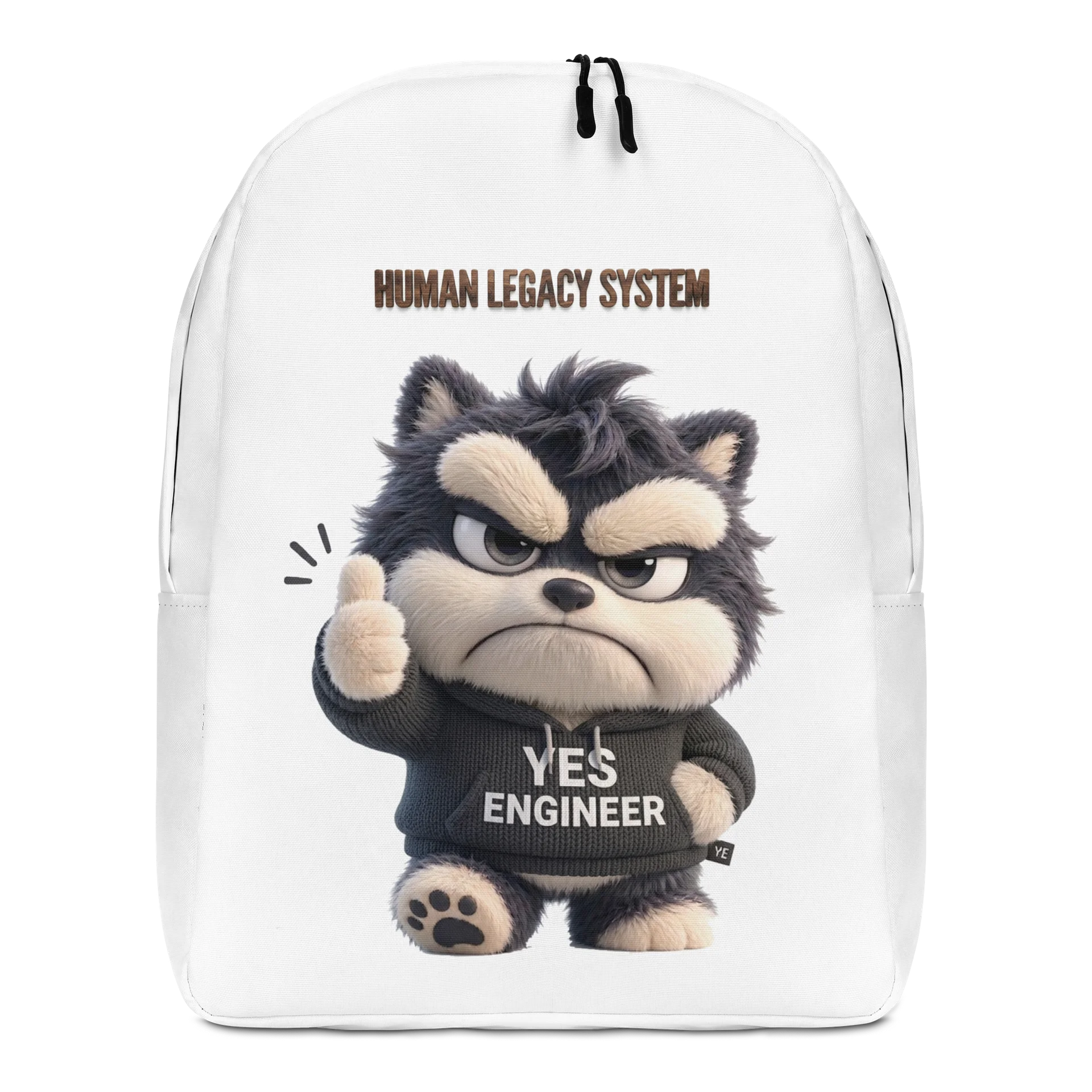

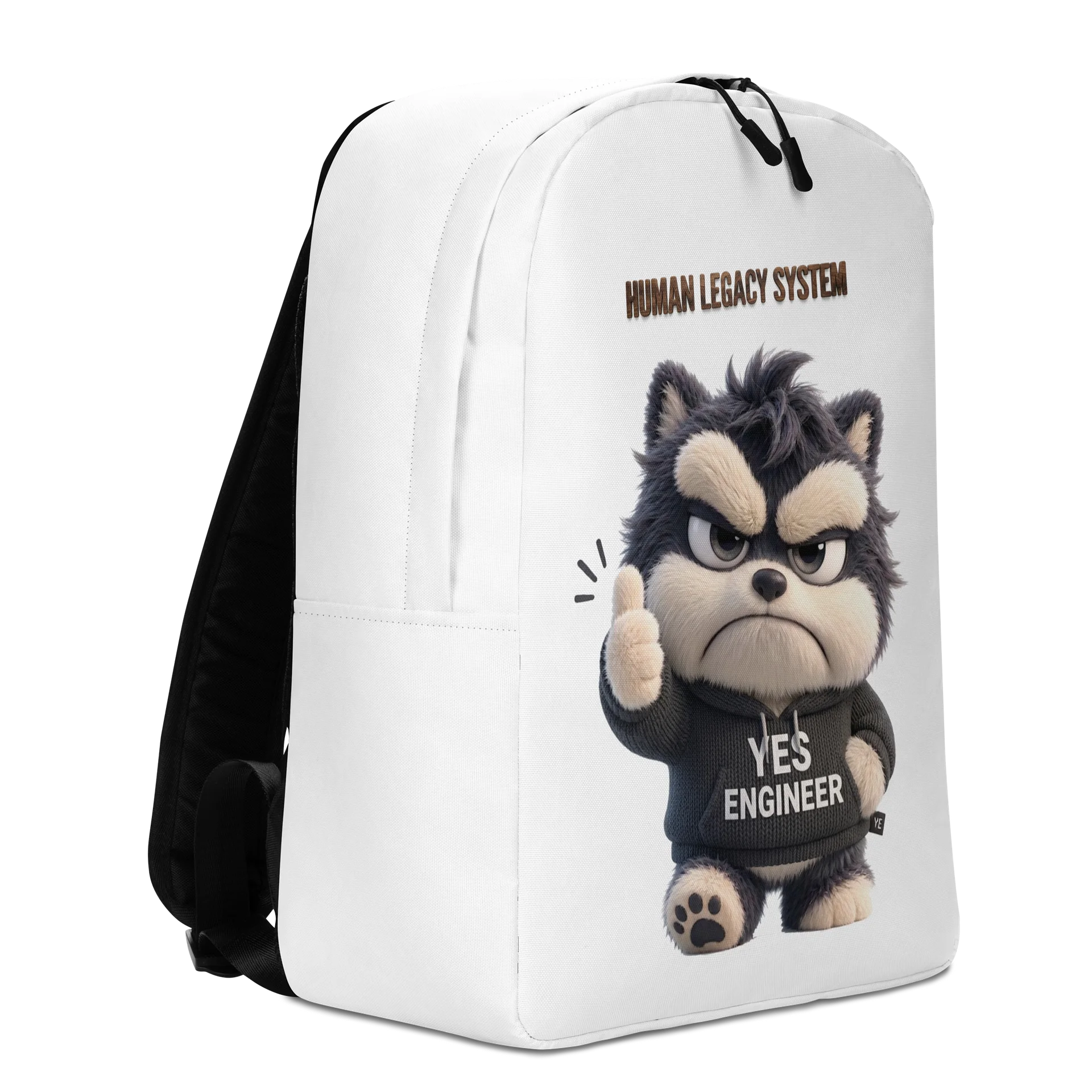

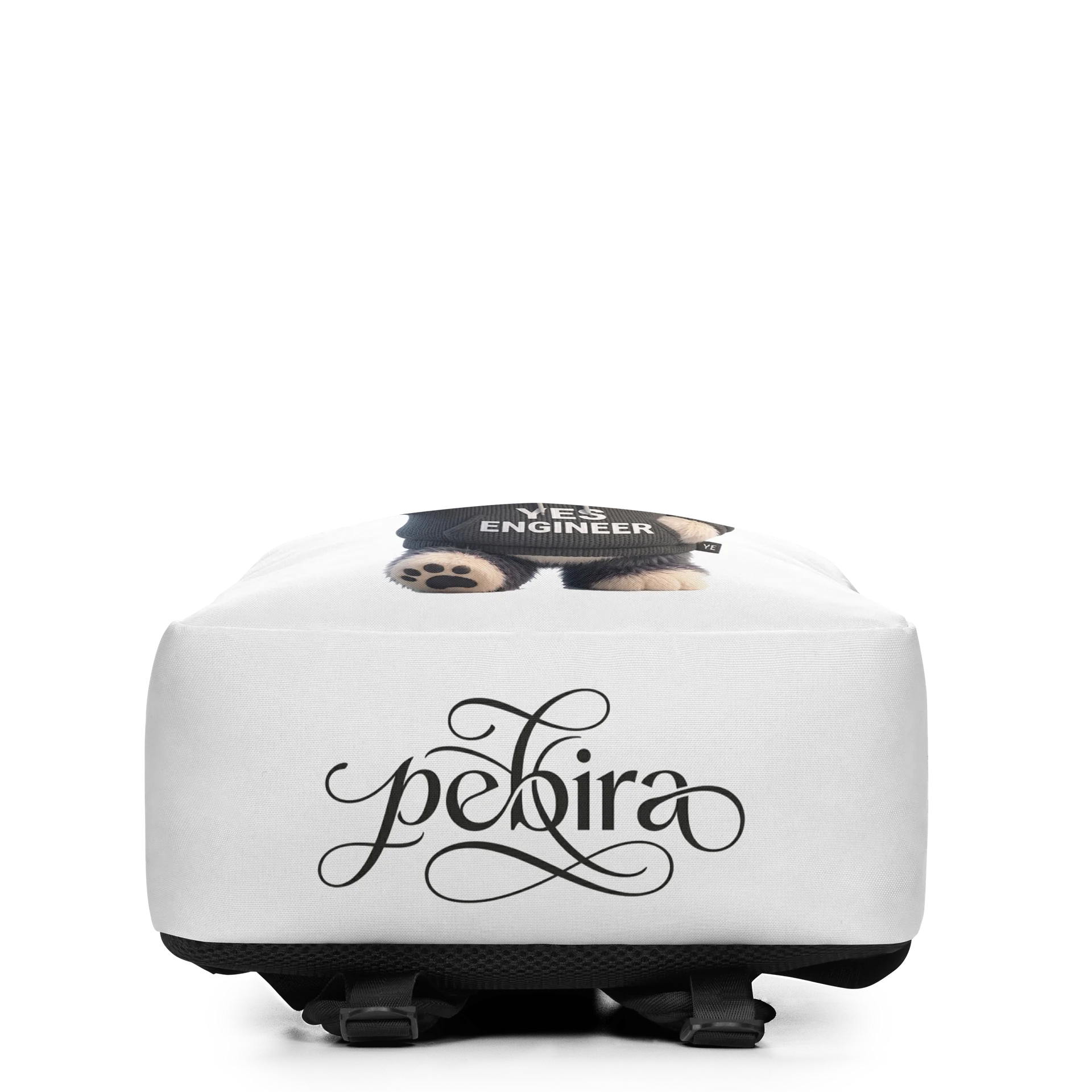





HUMAN LEGACY SYSTEM Backpack
HUMAN LEGACY SYSTEM.
A continuously running system component with no formal deprecation schedule.
In AI-native infrastructure environments, systems are frequently designed around modularity, scalability, and automated optimization. Within this framework, legacy components are typically expected to be replaced, refactored, or deprecated over time.
However, the human component behaves differently.
This design reflects that anomaly.
It frames the human as a persistent legacy system that remains operational within increasingly automated environments — still executing tasks, still adapting to new interfaces, and still absorbing system pressure despite lacking formal optimization pathways.
Unlike modern AI systems, this legacy component does not scale linearly, does not self-optimize predictably, and does not gracefully degrade under load. Instead, it continues functioning through adaptive improvisation.
Within the ai-meme collection, this piece represents the infrastructure continuity layer: where human cognition is treated as an older but still essential system module embedded within a rapidly evolving AI stack.
It reflects a broader architectural reality in AI-driven environments — where cutting-edge systems often depend on non-optimized but irreplaceable legacy human components for interpretation, judgment, and contextual grounding.
Related conceptual artifacts in this meme ecosystem include:
- VIBE CODING | emergent software creation without strict architecture
- I LOVE YOU BUT TOKEN IS EXPENSIVE | emotional interaction under resource constraints
- PERFECT RELATIONSHIP | anthropomorphic system projection patterns
Within the ai-meme hub, this piece functions as the infrastructure persistence layer: where outdated systems remain critical to the functioning of modern AI ecosystems.
Designed for developers, builders, and founders operating in hybrid environments where legacy and frontier systems coexist continuously.
Final Thoughts
The AI era isn't just producing new software.
It's producing new culture.
TOKI was created to celebrate the people building that future.
Not because humans are perfect.
But because every system still needs a reason to exist.
And that reason remains human.